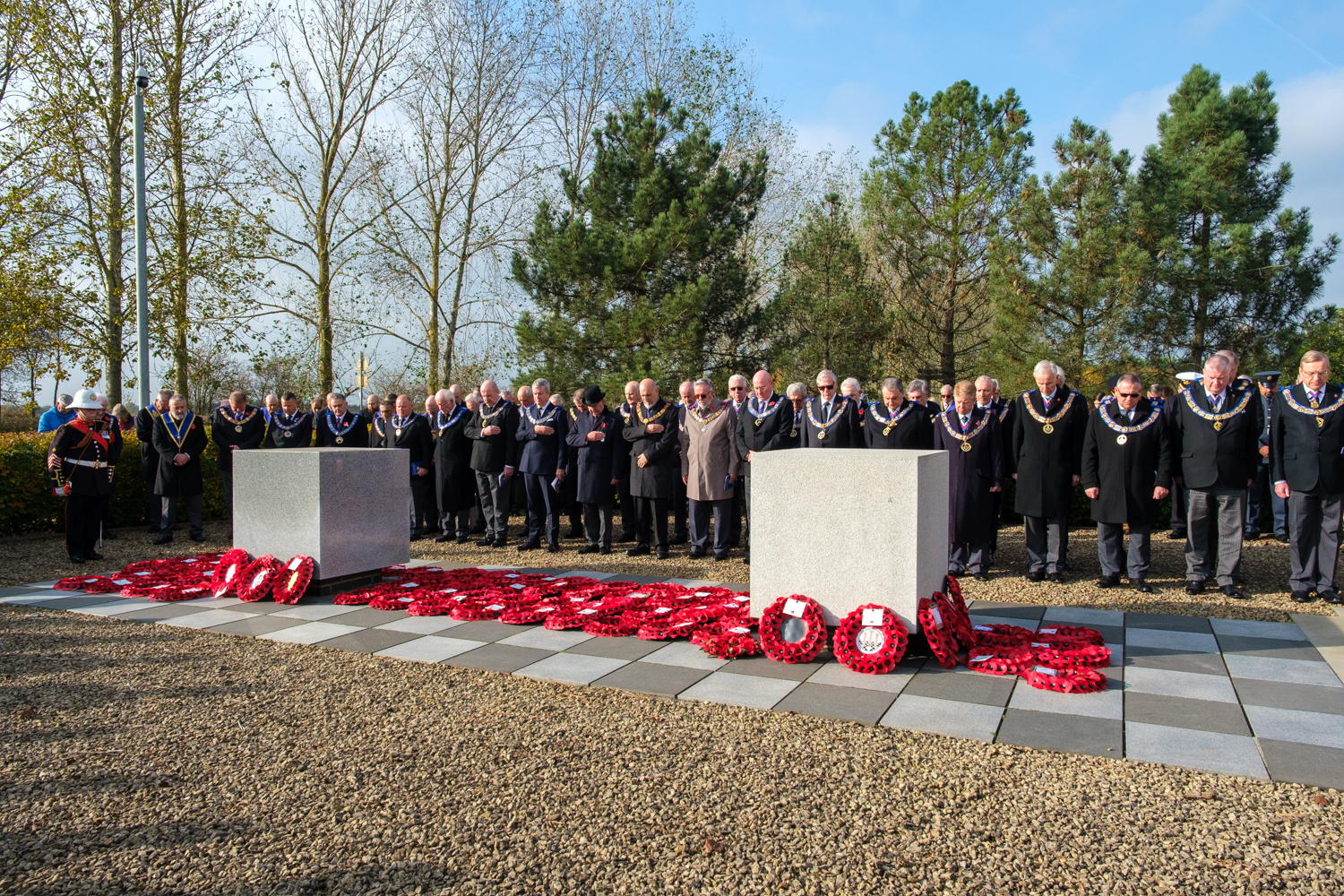
At this time of year, we think about Sacrifice for the greater good, drawing us to think of our Men and women in the Armed Forces throughout the years, those who sign that blank cheque with their lives to serve. Many of our brethren also serve in local services at monuments and in churches.
According to Sam Mendes' film Jarhead, war consists mainly of waiting for something to happen. The film is set in the Gulf War of 1991, and it's about Marines doing their tour of duty in the desert.... What I remember from it is the bafflement of those young men trying to make sense of going to war ‘in a country they don't understand against an enemy they can't see... for a cause they don't fully fathom'... You feel the disorienting effects of the relentless heat and the vast, lonely desert spaces, and that strange alchemy that I guess only fighting men and women know: the boredom, the tension, the fear as the waiting goes on and on, the sudden rush when the action finally erupts...
At the end of 1916, the year of the Battle of the Somme, the poet Robert Graves looked back on his experiences as a soldier. It's much the same as Jarhead, only foggy, cold and wet...
‘This is a dreary flat place... with the intolerable boredom of mess and not enough work to do, and people waiting their turn to go out again. No one is at his best here... The year is dying of atrophy... and the war is settling down on everyone - a hopeless, never-shifting burden. While newspapers and politicians yell and brandish their arms, the dead rot in their French graves, and the maimed hobble about the streets.'
The question is, and always has been, I suppose, what meaning attaches to the lives and experiences of men and women in war, caught up in huge impersonal forces over which they have so little control? And especially, what meaning attaches to their deaths? ‘What passing bells for those who die like cattle?' wrote another soldier-poet, Wilfred Owen - not to insult his fellow soldiers whom he loved dearly, but to point out that when slaughter is relentless and indiscriminate, we need to give even more value to each individual, recognise the humanity of each as someone's parent, someone's child, someone's sibling, colleague and friend. When we remember, we focus sharply on the contrast between the terrible and merciless forces of armed conflict and the lives and destinies of the individual human beings caught up in them.
We shouldn’t romanticise their world nor pretend that the people within it were perfect. They were human beings, with human virtues and, like all of us, human failings. The qualities that we remember, though, are courage in adversity, discipline in service, loyalty to one's companions, and care for those entrusted to one's protection. For them, it called to sacrifice, service, and courage over fear.
Christ didn’t teach His disciples that greatness was found in commanding others. He taught them that greatness was found in serving them.
Let us give thanks for those who have served others throughout the centuries.
Living and dying purposefully - Perhaps let us ask ourselves a difficult question in this time of remembrance
How are we serving others with the life given to us?
May we be people of courage without violence, conviction without hatred,
faith without arrogance, and strength joined always to mercy.
May we remember that the highest service is not taking life, but giving of oneself for the good of others.
May the words of Christ remain before us:
“Greater love hath no man than this, that a man lay down his life for his friends.”
May those who came before us rest in peace. May those who remain find strength. And may we, the living, prove worthy of remembrance ourselves—not through the power we possess, but through the good we leave behind.
Amen.
God Bless you
Revd Jon P L Whalley CF VR
